|
Themenwebsites
Medizin A - Z
im Info-Netzwerk
Medizin 2000
2.1.2026
|
|
|

Quelle:
Toronto Star
Operationen
ganz ohne Hautschnitt
Amerikanische
Chirurgen haben der Öffentlichkeit jetzt eine innovative neue
Operationstechnik vorgestellt, die möglicherweise die Chirurgie
der Zukunft revolutionieren wird. Das Forscherteam um Dr.
Anthony Kalloo von der Johns Hopkins University, hat bei Schweinen
innere Organe operiert, die über ein Standard-Endoskop erreicht
wurden, das durch die Magenwand in die Bauchhöhle eingeführt wurde.
Da bei diesem Zugang kein Haut- , bzw. Muskelschnitt mehr
erforderlich ist, kann mit einer deutlich verkürzten Heilungszeit
gerechnet werden. Erste Versuche am Menschen sind für den Zeitpunkt
geplant an dem speziell zu diesem Zweck entwickelte Geräte zur
Verfügung stehen werden.


Toronto Star Jul. 8, 2004. 01:00 AM
Doctors test new surgical method
WASHINGTON—A new surgical technique might help doctors operate
on internal organs without making cuts in the skin, researchers
reported yesterday.
Using a flexible mini-telescope called an endoscope, surgeons
said they could go in through a patient's mouth and make a cut
in the stomach wall to reach abdominal organs. They believe
such a method would allow patients to heal more quickly after
surgery.
Tests on animals showed they could get through the stomach wall
and the thin membrane surrounding the stomach called the peritoneum
to repair the intestines, liver, pancreas, gall bladder and
uterus.
They call the new method flexible transgastric peritoneoscopy,
or FTP, and describe it in the July issue of the journal Gastrointestinal
Endoscopy.
"FTP may dramatically change the way we practice surgery,"
said
Dr. Anthony Kalloo of Johns Hopkins University, who led the
study.
"The technique is less invasive than even laparoscopy because
we don't have to cut through the skin and muscle of the abdomen,
and it may prove a viable alternate to existing surgical procedures."
A laparoscope is a fibre-optic instrument inserted through the
abdomen to give a view of the organs.
The abdomen contains the stomach, bowels and reproductive organs.
“The technique is less invasive than even laparoscopy because
we don’t have to cut through the skin and muscle of the abdomen,
and it may prove a viable alternate to existing surgical procedures.”
The researchers, at a network of several medical schools in
the United States and Hong Kong, have tested their technique
on pigs using standard endoscopic equipment. They are hoping
for the development of specialized equipment before they begin
tests on people.
In one experiment they took liver biopsy samples from pigs,
which recovered completely with no signs of serious infection
or other complications, they said.
“Because the lining of the stomach repairs faster than skin,
recovery times should be reduced,” Kalloo said in a statement.
zum Originalartikel
zum Originalartikel
2
|
[an error occurred while processing this directive]
Werbung im Info-Netzwerk Medizin 2000
Nachfolgend haben im Gesundheitswesen tätige Personen, Organisationen und Unternehmen die Möglichkeit,
über ihre besonderen Kompetenzgebiete, Produkte und Dienstleistungen
zu informieren , bzw. für diese zu
werben.

Anzeige
Weltweit helfen viele ehrenamtlich tätige
Idealisten mit Hilfe der
kostenlosen Smartphone-App Be My Eyes sehbehinderten,
bzw. blinden Menschen - innerhalb weniger Sekunden und in über hundert Sprachen - die Tücken des Alltags besser zu
meistern.
mehr lesen
(WIKIPEDIA in deutscher Sprache)
Anzeige
Was Sie schon immer über die
Antibabypille
wissen wollten
Das Angebot an oralen Kontrazeptiva (die "Pille") ist groß. Jede Frau hat daher die Möglichkeit, sich die zu ihrer Lebenssituation passende
Antibabypille verordnen zu lassen.
Quelle:Info-Netzwerk Medizin 2000-de, www.antibabypille.info, 2025

Nicht invasive Analysen der Ausatemluft helfen bei der Diagnostik und dem Therapie-Management
von Atemwegserkrankungen wie Asthma und COPD.
Das
Medizintechnik-Unternehmen
Specialmed hat sich auf Atemgas-Analysen spezialisiert und bietet
Therapeuten und betroffenen Patienten kleine,
leicht zu bedienende
Atemgas-Analyse-Geräte an.
Schwerpunkte der Anwendung sind der zum
Management einer Asthma- und COPD-Therapie geeignete
FeNO-Atemtest
- und
der
H2-Atemtest
der eine schnelle und unkomplizierte Diagnose einer
Laktose-Unverträglichkeit dient.
Nützlich ist auch der ToxCO-II- Atemtest,
da er die Erkennung von
leicht zu übersehenen, lebensbedrohlichen Kohlenmonoxid-Vergiftungen
ermöglicht.
Dieser Test unterstützt auch die
Rauchenentwöhnung
und senkt bei
Ex-Rauchern das ständig vorhandene Rückfall-Risiko.
Wichtige Info-Links:

Anzeige
Es gibt keine allgemein wissenschaftlich anerkannten Regeln welche Lebensmittel
in welcher Kombination, bzw. Menge gesund sind - und welche nicht.
Man kann den Eindruck gewinnen, dass jeder "Experte" eine individuell unterschiedliche Auffassung
von bestimmten Themen hat . Die wissenschaftlichen Erkenntnisse widersprechen einander und
die Ansichten variieren erheblich. Auf der Website
www.medizin-2000.de/gesunde-ernaehrung versuchen wir unsere Besucher durch unvoreingenommene Informationen in die Lage zu versetzen, sich trotz des
vorherrschenden Datenchaos ein praxistaugliches eigenes Urteil zu bilden.

Anzeige
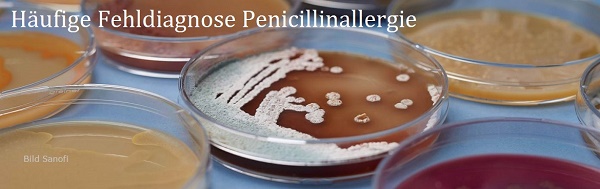
Die angeblich weite Verbreitung von
Penicillin-Allergien, behindert die medikamentöse Behandlung von bakteriell bedingten Infektionen.
Die vom Patienten erinnerte Diagnose wird
selten überprüft und ist oft (bis
zu 90%?) falsch.
Sie führt zum unnötigen Einsatz
von teuren Reserve-Antibiotika und
fördert die Entwicklung weiterer Antibiotika-Resistenzen.
Preisgünstiges Penicillin könnte
nach erfolgtem Test, ohne Nebenwirkungen befürchten zu müssen, verordnet werden. Die
häufige Fehldiagnose
"Penicillin-Allergie"
führt zum unnötigen,
kontraproduktiven Einsatz teurer Reserve-Antibiotika. Auf der Website
www.allergietherapie.de/penicillinallergie
können sich Betroffene weiter informieren.
|
|
|

 zum Seitenanfang
|
|
|
[an error occurred while processing this directive]
|
|