|
Themenwebsites
Medizin A - Z
im Info-Netzwerk
Medizin 2000
2.1.2026
|
|
|

Während in Europa HIV
Infektionen über infizierte Injektionsnadeln dank der verbreiteten
Ausgabe steriler Nadeln an Drogenabhängige nahezu ausgerottet
wurden, stieg die Zahl der durch heterosexuelle
Kontakte infizierten Patienten weiter auf derzeit 51%
an.

Half of HIV Cases Spread Heterosexually in Europe
Wed Mar 19,11:24 AM ET
By Richard Woodman
LONDON (Reuters Health) - Researchers warned on Wednesday that
the number of women being diagnosed with HIV (news - web sites)
in Europe was quickly catching up with men, carrying with it the
risk of more babies being born to infected mothers.
The healthcare market research agency, Isis Research Plc, said
its analysis of HIV figures showed just how fast this was happening
in Europe even though in the United States
homosexual transmission remained the dominant route of infection.
The agency looked at data on 3,000 European patients on anti-HIV
therapy from July to October 2002 and found that 308
of these patients had been newly diagnosed with HIV earlier that
year.
Of these, just over half (51 percent) were
infected through heterosexual contact and only 36 percent as a
result of homosexual contact. This was in stark contrast
to the picture 10 years ago, when the split was 28 percent heterosexual
against 38 percent homosexual.
However, in the United States, where ISIS also examined data on
3,000 patients, infections via homosexual contact accounted for
51 percent of new HIV diagnoses against 31 percent heterosexual.
ISIS HIV analyst Amanda Zeffman told Reuters Health that numerous
factors including different ethnic origins and awareness campaigns
accounted for the differences between Europe and the U.S. However
the gap was narrowing as more heterosexuals
became infected with HIV in the U.S.
The report said that in Europe the number
of females being diagnosed with HIV was "fast catching up
with the number of males. This rise in female patients
carries with it the risk of a rise in the number of babies born
to HIV infected mothers and in turn brings potential issues such
as which treatments to use or avoid during pregnancy and at the
time of birth to prevent transmission of the virus to the baby."
On a positive note, the report said initiatives to supply drug
users with sterile needles seemed to have been effective in Europe,
with HIV transmission via intravenous
drug use now almost eradicated in France, Germany and the UK and
significantly reduced in Spain and Italy. However in
the U.S., where needle exchange programs were less widespread,
infection rates had dropped less.
"Europe has come a long way toward minimizing the spread
of HIV via intravenous drug use. However governments must now
turn their attention to the rise in transmission via heterosexual
contact," Zeffman said.
She said it appeared that despite all the information available
about AIDS (news - web sites) many European heterosexuals don't
think they could be at risk.
"Whilst a return to the shock awareness campaigns of the
early 90s may not be welcomed, it is clear that there is a great
need for a new awareness campaign if the spread of infection via
this route is to be minimized in the coming years," she said.
|
|
|
[an error occurred while processing this directive]
Werbung im Info-Netzwerk Medizin 2000
Nachfolgend haben im Gesundheitswesen tätige Personen, Organisationen und Unternehmen die Möglichkeit,
über ihre besonderen Kompetenzgebiete, Produkte und Dienstleistungen
zu informieren , bzw. für diese zu
werben.

Anzeige
Weltweit helfen viele ehrenamtlich tätige
Idealisten mit Hilfe der
kostenlosen Smartphone-App Be My Eyes sehbehinderten,
bzw. blinden Menschen - innerhalb weniger Sekunden und in über hundert Sprachen - die Tücken des Alltags besser zu
meistern.
mehr lesen
(WIKIPEDIA in deutscher Sprache)
Anzeige
Was Sie schon immer über die
Antibabypille
wissen wollten
Das Angebot an oralen Kontrazeptiva (die "Pille") ist groß. Jede Frau hat daher die Möglichkeit, sich die zu ihrer Lebenssituation passende
Antibabypille verordnen zu lassen.
Quelle:Info-Netzwerk Medizin 2000-de, www.antibabypille.info, 2025

Nicht invasive Analysen der Ausatemluft helfen bei der Diagnostik und dem Therapie-Management
von Atemwegserkrankungen wie Asthma und COPD.
Das
Medizintechnik-Unternehmen
Specialmed hat sich auf Atemgas-Analysen spezialisiert und bietet
Therapeuten und betroffenen Patienten kleine,
leicht zu bedienende
Atemgas-Analyse-Geräte an.
Schwerpunkte der Anwendung sind der zum
Management einer Asthma- und COPD-Therapie geeignete
FeNO-Atemtest
- und
der
H2-Atemtest
der eine schnelle und unkomplizierte Diagnose einer
Laktose-Unverträglichkeit dient.
Nützlich ist auch der ToxCO-II- Atemtest,
da er die Erkennung von
leicht zu übersehenen, lebensbedrohlichen Kohlenmonoxid-Vergiftungen
ermöglicht.
Dieser Test unterstützt auch die
Rauchenentwöhnung
und senkt bei
Ex-Rauchern das ständig vorhandene Rückfall-Risiko.
Wichtige Info-Links:

Anzeige
Es gibt keine allgemein wissenschaftlich anerkannten Regeln welche Lebensmittel
in welcher Kombination, bzw. Menge gesund sind - und welche nicht.
Man kann den Eindruck gewinnen, dass jeder "Experte" eine individuell unterschiedliche Auffassung
von bestimmten Themen hat . Die wissenschaftlichen Erkenntnisse widersprechen einander und
die Ansichten variieren erheblich. Auf der Website
www.medizin-2000.de/gesunde-ernaehrung versuchen wir unsere Besucher durch unvoreingenommene Informationen in die Lage zu versetzen, sich trotz des
vorherrschenden Datenchaos ein praxistaugliches eigenes Urteil zu bilden.

Anzeige
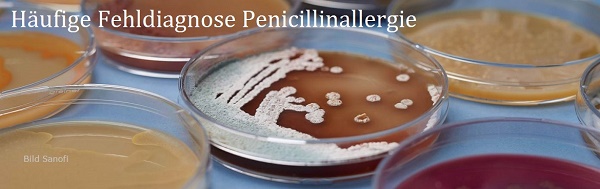
Die angeblich weite Verbreitung von
Penicillin-Allergien, behindert die medikamentöse Behandlung von bakteriell bedingten Infektionen.
Die vom Patienten erinnerte Diagnose wird
selten überprüft und ist oft (bis
zu 90%?) falsch.
Sie führt zum unnötigen Einsatz
von teuren Reserve-Antibiotika und
fördert die Entwicklung weiterer Antibiotika-Resistenzen.
Preisgünstiges Penicillin könnte
nach erfolgtem Test, ohne Nebenwirkungen befürchten zu müssen, verordnet werden. Die
häufige Fehldiagnose
"Penicillin-Allergie"
führt zum unnötigen,
kontraproduktiven Einsatz teurer Reserve-Antibiotika. Auf der Website
www.allergietherapie.de/penicillinallergie
können sich Betroffene weiter informieren.
|
|
|
|
|
|
|

 zum Seitenanfang
|
|
[an error occurred while processing this directive]
|